
Phone service and safety when leaving an abusive situation
- Lifeline Program, Government Assistance 101
 By
John Shim, founder and editor
By
John Shim, founder and editor
Table of Contents
If you’re planning to leave, or you’ve just left, a phone on a shared account is both a lifeline and a liability. You need the number — it’s how your children’s school, your caseworker, a potential employer and your support network reach you. But as long as that number sits on an account the other person controls, they may be able to see who you’ve called, cut your service off, or run up charges you’ll be chased for later.
Since mid-2024, federal law gives you a way out of that bind. Under the Safe Connections Act, mobile providers must separate a survivor’s line — and the lines of anyone in the survivor’s care — from an account shared with an abuser, usually within two business days, with no fees and no penalties. And if the separation leaves you struggling to pay for service on your own, a dedicated Lifeline survivor benefit can cover up to six months of phone or internet costs while you get back on your feet.
Before anything else, one safety warning that most guides bury: your call and text logs on a shared account are not yet hidden, even for calls to domestic violence hotlines. The FCC has adopted rules requiring providers to omit calls and texts to certain hotlines from consumer-facing logs, but the compliance deadline was postponed in April 2025 and had not taken effect when the postponement was announced. If the account holder can view usage records, assume they can see any number you dial or message. Use a different phone — a friend’s, a library’s, an advocate’s — to contact hotlines or plan your exit. And remember that any phone can still call 911, even with no service plan at all.
The right to separate your line
The Safe Connections Act was signed on 7 December 2022 and amends the Communications Act to require mobile service providers to separate the line of a survivor of domestic violence and related abuse — and the lines of individuals in the survivor’s care — from a mobile service contract shared with an abuser. The FCC’s implementing rules required providers to comply with the line-separation requirements by 15 July 2024, so this is now a working right at every mobile carrier, not a proposal.
A few things about the mechanism are worth understanding, because they explain the edges of the right.
First, it covers mobile service. Every FCC document frames the duty as applying to mobile service providers and shared mobile contracts. A landline or a standalone home-internet account isn’t covered by this particular right, so don’t let a provider’s confusion on a different product put you off pursuing the mobile separation you’re entitled to.
Second, the two-business-day clock is the norm, not an unconditional guarantee. The FCC’s consumer guide says providers must respond to and process a completed request within two business days in most cases, and that where a separation isn’t technically feasible, the provider must offer you an alternative solution. So if a representative says it can’t be done, the conversation isn’t over — they owe you an alternative, not a shrug.
Third, no early termination fees or penalties may be charged for the separation. You are not breaking the contract by leaving it; the law breaks it for you, cleanly.
The covered situations are broader than many people assume: the FCC’s guidance references domestic violence, dating violence, stalking, sexual assault and human trafficking.
How to make the request
The process, per the FCC’s step-by-step guide, is to contact the provider, give your phone number and the numbers of anyone in your care that you want moved with you, and state clearly that you are requesting a line separation under the Safe Connections Act. Using that exact phrase matters, because providers are required to train the employees who handle these requests — naming the law routes you to the right process rather than a generic account-change script.
You’ll need a document that names both you and the abuser and includes a statement indicating actual or alleged abuse. The acceptable documents are wider than a court order:
| Document type | Notes |
|---|---|
| Signed affidavit | From a licensed medical provider, mental health care provider, social worker, victim services provider, or court employee |
| Police report | Including military or Tribal police statements |
| Restraining order | Court-issued |
| Military protective order | For service members and families |
The FCC publishes a line-separation request checklist you can work through before you contact the carrier, which helps you arrive with everything in hand and keep the interaction short.
The rules also address the dangerous moment after you ask. Under FCC staff guidance from March 2025, the provider must tell you the date on which it intends to give any formal notification about the separation, cancellation or suspension to the primary account holder — and, where the separation involves the abuser’s line, to the abuser. That means you can time your request so that any notice lands after you’re somewhere safe, rather than being blindsided. The provider must also give you information about alternative options, including starting a new account, and notices must be available in accessible formats such as large print or braille, matching how the provider serves customers with disabilities generally.
If a provider stalls, refuses, or mishandles the request, you can file a complaint at fcc.gov/complaints. Our guide on escalating problems with a phone provider walks through how that process works.
Paying for service on your own: the Lifeline survivor benefit
Separating your line solves the control problem. It doesn’t solve the money problem — you’re now responsible for a bill that used to be shared, often at exactly the moment your finances are most chaotic. This is what the Lifeline survivor benefit exists for.
As of September 2024, survivors who have attempted a line separation and are experiencing financial hardship can qualify for emergency Lifeline support lasting up to six months. The amounts:
| Situation | Monthly survivor benefit |
|---|---|
| Phone, internet, or bundled service | Up to $9.25 |
| Living on qualifying Tribal lands | Up to $34.25 |
Qualification has two parts, and it’s important not to conflate them with ordinary Lifeline rules. You need evidence of a legitimate line separation request submitted to a service provider — note that an attempted request counts; you don’t have to have won the argument with the carrier first. And you need to show financial hardship, either through the existing Lifeline criteria or through expanded survivor criteria that include household income at or below 200% of the Federal Poverty Guidelines. That 200% threshold is deliberately more generous than the 135% used for standard Lifeline, because the programme recognises that someone who has just left a shared household may have income on paper but no real access to it yet.
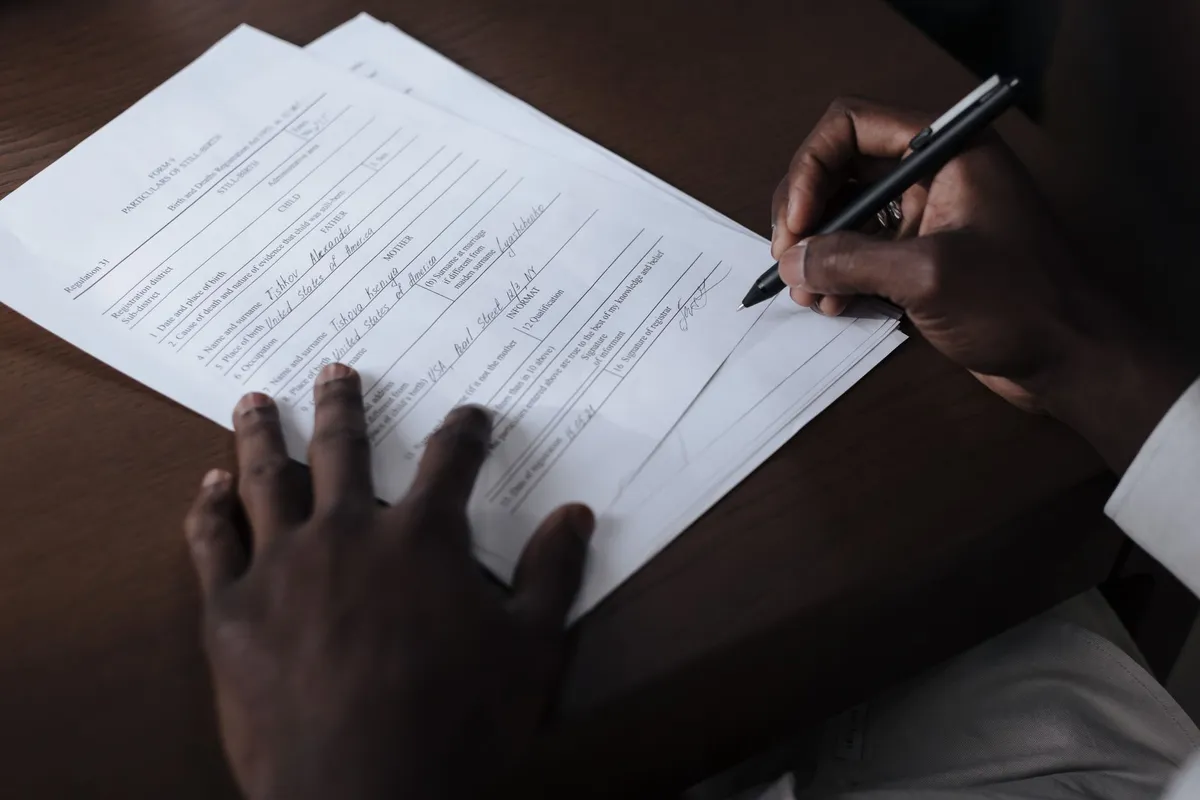
The Lifeline paper application now has a dedicated survivor section, and the application instructions explain what to attach. You’ll acknowledge on the form that the benefit lasts six months and is non-transferable. If you’re applying online, the request goes through the same system as regular Lifeline — our explainer on the National Verifier covers how that decision gets made. If the household you’ve just left already had a Lifeline benefit, read up on the one-per-household rule and the household worksheet before you apply, so a form error doesn’t delay you.
What happens after six months
The survivor benefit is a bridge, not a destination. When it ends, you can apply for standard Lifeline if you qualify under the normal rules — income at or below 135% of the Federal Poverty Guidelines, or participation in a qualifying programme. The standard amounts differ by service type, and this trips people up: it’s up to $9.25 per month for internet or bundled services, but only $5.25 per month for voice-only service (up to $34.25 and $30.25 respectively on Tribal lands). If your circumstances have just changed — a new household, a single income, newly approved SNAP or Medicaid — you may qualify now even if you never did before. See the 135% income rule explained for how the threshold works, and always check current-year figures rather than old tables, since the programme updates to each year’s Federal Poverty Guidelines.
Keeping your location private
A new phone account, a Lifeline application and a new address all create records, and it’s reasonable to worry about where those records go. Two verified federal protections are worth knowing about. If you live in federally assisted housing, HUD’s VAWA protections include a right to strict confidentiality of your status as a survivor. And in the child support system, a PRWORA ‘family violence indicator’ restricts the release of location information where there’s a safety risk — something to ask about if you’ll be dealing with child support enforcement.
Beyond those, a victim services provider or domestic violence advocate is the best first stop for advice on keeping your new address out of public records in your state; they handle this question constantly and know the local options. If you’re moving while holding a Lifeline benefit, there are also reporting rules about address changes you’ll want to get right.
Frequently asked questions
Will my abuser be told that I separated my line? The provider must tell you, in advance, the date on which it intends to give any formal notification about the separation to the primary account holder — and to the abuser, if the separation involves the abuser’s line. That lets you plan your request around your own safety timeline rather than being caught out.
Does a line separation cost anything? No. The FCC’s rules prohibit early termination fees or penalties for a Safe Connections Act line separation, even if you’re mid-contract.
What if I don’t have a police report or restraining order? You don’t need one. A signed affidavit from a licensed medical provider, mental health care provider, social worker, victim services provider or court employee also qualifies, as long as it names you and the abuser and indicates actual or alleged abuse.
Can I get the survivor benefit if the carrier hasn’t completed my separation yet? Yes. Qualification requires evidence of a legitimate line separation request submitted to a provider, plus financial hardship. An attempted request counts — you don’t have to wait for the carrier to finish processing.
Is the survivor benefit the same as regular Lifeline? No. It’s an emergency benefit lasting up to six months, with a more generous income threshold (200% of the Federal Poverty Guidelines versus 135% for standard Lifeline). When it ends, you can apply for standard Lifeline under the normal rules if you qualify.