Getting an ID When You Don't Have a Permanent Address
- Lifeline Program, Government Assistance 101
 By
John Shim, founder and editor
By
John Shim, founder and editor
Table of Contents
You’re trying to apply for something, a free phone, SSI, food benefits, and the form wants two things you don’t have: identification and an address. The two problems feed each other. You can collect mail at a post office through General Delivery, but the Social Security Administration’s own guidance notes that you must have valid identification to claim General Delivery mail. And replacing lost ID usually means receiving documents by post somewhere. If you’re sleeping in a shelter, a car or on a friend’s sofa, it can feel like every door is locked from the inside.
Here is the thing most people get wrong, and the reason this article exists: the Lifeline programme does not require a permanent address, and in some cases it doesn’t require an address document at all. USAC, the body that runs the National Verifier, will accept a pin dropped on a map, or even a hand-drawn sketch showing the nearest crossroads and landmarks, as proof of where you live. If you’ve been putting off applying because you assumed you’d be rejected without a lease and a driver’s licence, start there. It’s often the first official record a person without housing can actually get, and the phone it brings makes every other application easier.
What Lifeline actually asks for
The national Lifeline application collects your full name, date of birth, the last four digits of your Social Security number or a Tribal ID number, and a home address. Note what’s missing: it doesn’t demand a full SSN, and according to USAC’s official FAQ, applicants without a permanent address “can use a temporary home address (such as the address of a shelter, family, or friend) or a descriptive address” describing where they physically live. The application form itself has a tick-box asking whether the address is temporary, a temporary address is a fully legitimate answer, not a red flag.
There is one hard limit: the home address cannot be a P.O. Box. The FCC’s consumer guide confirms that consumers without a permanent residential address must give a temporary one instead, and that the provider or state agency may ask for confirmation of it. A P.O. Box can still appear as your billing or mailing address, the ban applies to the address that says where you live.
Why does the address matter so much if the programme doesn’t care whether you have housing? Because the National Verifier uses addresses to catch duplicates. The system runs your details through identity checks and the USPS Address Matching Service, and flags cases where two benefits seem to be going to the same person or household. The address isn’t a test of respectability; it’s a key in a database. Once you understand that, the workarounds below make sense, the system just needs a consistent way to locate you.
Passing the address check with no paperwork
If the automated check can’t find your address, common for shelters, new buildings, rural routes and descriptive addresses, your application goes to manual review. USAC’s error-resolution page sets out what it will accept, and the list is far more forgiving than people expect.
| How you can prove where you live | What it involves | Worth knowing |
|---|---|---|
| Pin-drop on a map (online) | The portal prompts you to mark your residence on a mapping tool; USAC records the coordinates | No document needed at all |
| Printed map (by mail) | A Google Maps printout or similar with your location pinned or circled | USAC will work out the coordinates |
| Hand-drawn map (by mail) | A sketch showing the nearest crossroads or mile markers, landmarks and distances | Explicitly accepted by USAC |
| ID document | Unexpired driver’s licence or federal, state or Tribal ID showing your name and address | Must be unexpired |
| Bill or statement | Utility bill, current mortgage or lease statement | A bill from your own Lifeline or internet provider does not count |
| Income paperwork | Paycheck stub, W-2 or your most recent tax return | Must show name and address |
| Government letter | An official letter from a federal, state or Tribal agency | A benefits award letter often does double duty |
| USPS confirmation | Confirmation that the address is deliverable | Useful for new or unusual addresses |
Documents generally need to be dated within the past 12 months or have an expiry date in the future, per USAC’s documents guidance. If you’re on Tribal lands and claiming the enhanced Tribal benefit, coordinates are required to resolve an address error, so the map route isn’t just a fallback, it’s the expected path. There’s a fuller walkthrough of this situation in When the National Verifier can’t find your address.
Using a shelter, friend or service provider’s address
For programmes beyond Lifeline, the standard answer is a borrowed address, and federal agencies say so openly. The FTC’s guidance for people without permanent addresses confirms you can ask a friend, family member or shelter to let you use their address. The Social Security Administration goes further: its homelessness page says a claimant can use a service provider’s address as a mail drop, you just give SSA the provider’s name, address and phone number. SSA’s internal rules also allow a Social Security field office address to be used when a claimant has no permanent mailing address, with USPS General Delivery as the alternative.
If a shelter or day centre you use has a caseworker, ask whether they issue address letters and whether they’ll hold mail for you. Many service providers do this routinely, and SSA-funded SOAR caseworkers, available in all 50 states to help homeless adults with SSI and SSDI applications, handle exactly this kind of logistics. If you’re applying for disability benefits, it’s worth knowing which of SSI and SSDI you’re actually in line for, because it changes what else you qualify for later.
One caution for anyone leaving a dangerous situation: if you’re a survivor enrolling in Lifeline under the Safe Connections Act, the application form lets you list an address from the last six months rather than your current one. There’s more on that route in our guide to phone service for domestic violence survivors.
A shared address doesn’t cost you the benefit
Shelter residents often assume that because someone else at the address already has Lifeline, they’re blocked. They’re not. The one-per-household rule tracks economic units, adults who live together and share income and expenses, not street addresses. The FCC states plainly that Lifeline is available to eligible people living in group living facilities as separate households. USAC’s own Household Worksheet gives the examples: four roommates who don’t share money are four households entitled to four benefits, and thirty residents of an assisted-living home who don’t share money are thirty households. If the system flags your address as a duplicate, the worksheet is how you clear it, see filling in the Household Worksheet without getting denied and the broader explainer on what counts as a household.
Getting the state ID itself
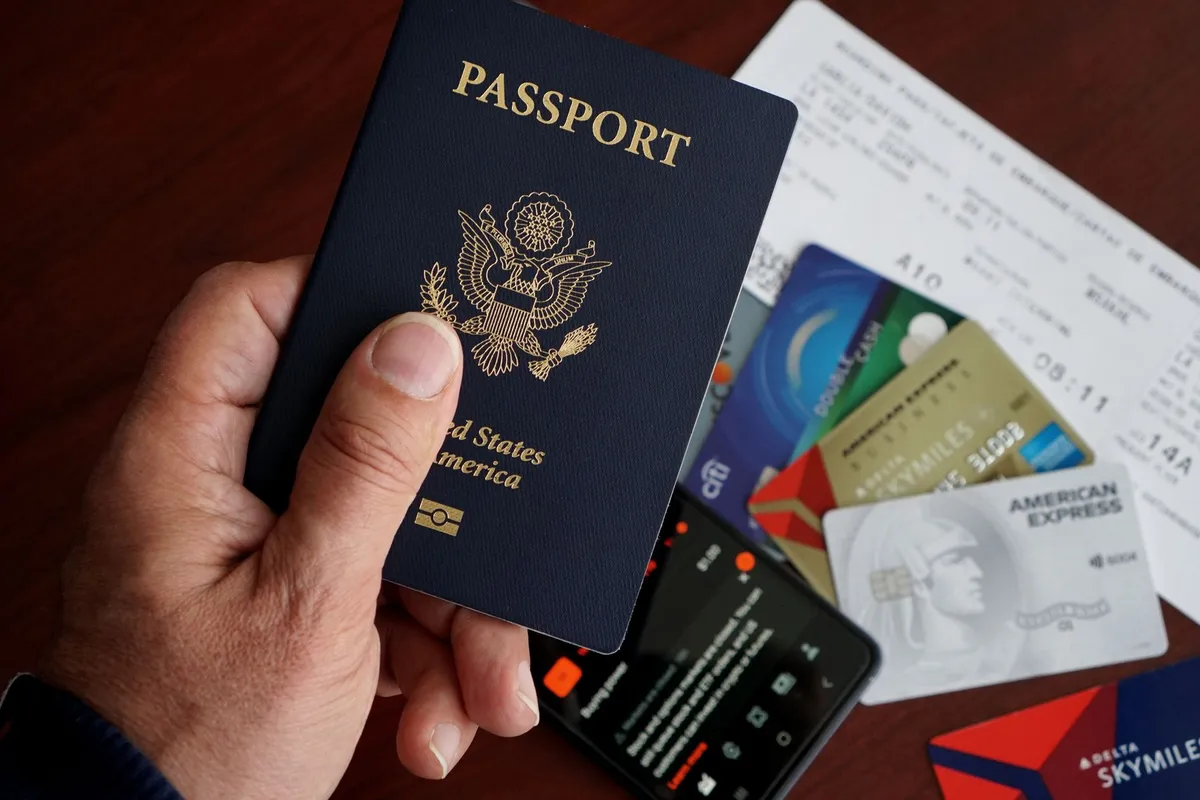
State ID rules are set state by state, so there’s no single national answer on which residency documents a DMV will take or what a card costs. The best starting point is the federal Homeless and Housing Resource Center’s toolkit on obtaining identification documents, produced for exactly this situation, it covers ID types, replacement and costs, in English and Spanish, and it’s what caseworkers use. A shelter caseworker can usually tell you what your state’s motor vehicle agency accepts locally.
It helps to know what counts as “primary” ID in the federal hierarchy, because that’s what you’re ultimately building towards. SSA’s rules treat an unexpired driver’s licence, state non-driver ID card, or U.S. passport as primary evidence of identity, with military ID, naturalisation certificates and U.S. Indian Tribal cards among the secondary options, originals or certified copies only, never photocopies. The VA’s acceptable-ID list follows a similar pattern. A Social Security card is often a stepping stone in the chain; if yours is lost, start with replacing a lost Social Security card.
The practical sequence for most people is: Lifeline first (no permanent address needed, and the phone gives agencies a way to reach you), then a mailing arrangement through a shelter, service provider or General Delivery, then the state ID, then everything else.
Keep the record consistent afterwards
Whatever address you give becomes part of your Lifeline record, and the obligations attached to it are real. You must tell your provider within 30 days of moving, and you’ll face annual recertification. A temporary address doesn’t change that; the FCC notes only that providers or state agencies may require confirmation of it. See moving house with Lifeline for what to report and when.
One thing to watch: in February 2026 the FCC adopted a proposal to overhaul Lifeline, including seeking comment on whether carriers should collect and store full Social Security numbers rather than the last four digits. Comments closed in June 2026 and the proceeding is still pending, so today’s rules stand, but documentation requirements could tighten, which is one more reason not to wait.
Frequently asked questions
Can I use a P.O. Box as my address on the Lifeline application? Not as your home address, the application form says “Do not use a P.O. Box.” You must give a residential, temporary or descriptive address showing where you physically live. The FCC’s consumer guide confirms a temporary address is acceptable but a P.O. Box is not.
I live in a shelter and someone here already gets Lifeline. Am I blocked? No. The one-per-household rule applies to economic units, not buildings. The FCC says people in group living facilities count as separate households, and USAC’s Household Worksheet exists precisely to clear the duplicate-address flag.
I have literally no documents. Can I still prove my address? Often, yes. Applying online, the National Verifier can accept a pin-drop on a mapping tool. By mail, USAC accepts a printed map with your location circled, or a hand-drawn map identifying your residence by the nearest crossroads, landmarks and distances.
Do I need my full Social Security number? No, the application asks for the last four digits of your SSN, or a Tribal ID number instead. The FCC has proposed requiring carriers to collect full SSNs, but that is a pending proposal, not the current rule.
Where can mail be sent if no shelter will hold it for me? USPS General Delivery lets you collect mail at a post office, and SSA guidance allows using a Social Security field office address or a service provider’s address as a mail drop for its own correspondence. Be aware you’ll need valid identification to collect General Delivery mail, which is why getting a basic ID should be an early priority.